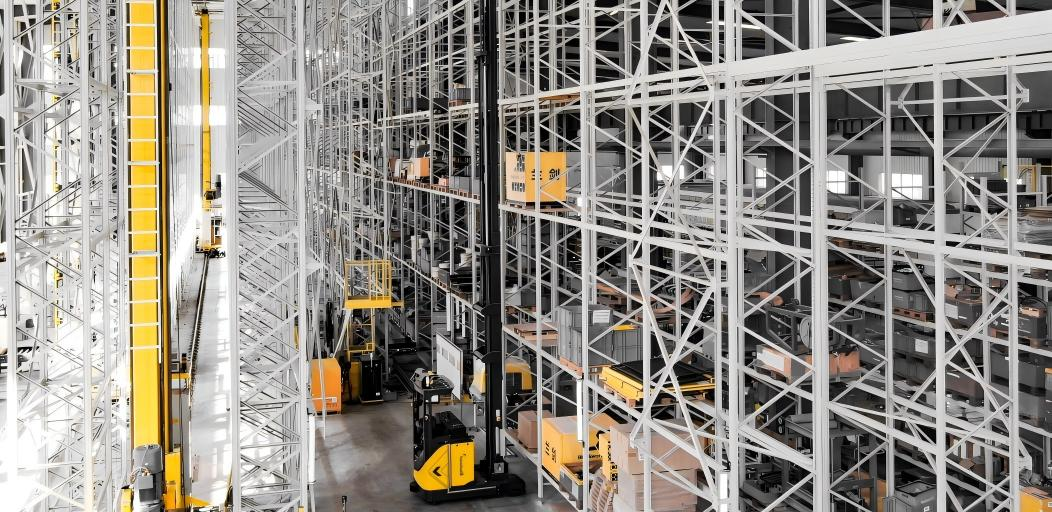
Modern logistics facilities operate under tremendous pressure to accelerate horizontal material transport while reducing their ongoing labor dependencies. As global supply chains expand, warehouses must evaluate how manual forklifts, pallet jacks, and automated mobile robots can support their internal material handling requirements.
These legacy methods force operations managers to evaluate advanced robotic alternatives to maintain competitive fulfillment speeds. The primary strategic decision often comes down to comparing AGV AMR technologies to determine the most effective fit for a specific distribution center.
While both automated solutions successfully eliminate manual transit errors, their underlying navigational logic, environmental adaptability, and deployment requirements differ significantly. Decision-makers must analyze their facility layout, inventory characteristics, and future scalability needs before committing massive capital to a digital fleet.
Choosing the correct automated carrier ensures a sprawling distribution hub maintains continuous, high-speed throughput without suffering from unexpected traffic jams, product damage, or structural limitations.
Evaluating Navigational Flexibility in Dynamic Environments
AGVs typically follow predefined routes or navigation references, while AMRs can use onboard sensing and mapping technologies to adapt to changing environments. However, actual navigation capabilities depend on the robot’s configuration and navigation system. When comparing AGV AMR systems, facility directors must critically assess how frequently their operational floor layouts change.
If your distribution floor experiences frequent traffic fluctuations, dynamic staging requirements, and layout changes, a highly flexible navigation system is essential. For example, BlueSword’s Latent Mobile Robot series offers multiple navigation options, including QR code, VSLAM, and LSLAM, depending on the model and configuration. Selected models achieve positioning accuracy of up to ±10 mm and ±1°, enabling reliable and flexible operations in dynamic warehouse environments.
These navigation capabilities help mobile robots adapt to changing warehouse conditions and support more flexible material transport operations.
Matching Equipment to Heavy Payload and Speed Requirements
Beyond spatial navigation and layout mapping, selecting the appropriate robotic technology requires a thorough evaluation of your specific payload dimensions, required travel speeds, and vertical lifting heights. Not all automated carriers are engineered for identical industrial tasks.
Warehouses dealing with massive raw materials or dense pallets require specialized forklift-style robots. BlueSword’s Reach Truck Forklift AMR is designed for pallet handling in high-rack warehouse applications, with rated load configurations of 1,600 kg and 2,500 kg.
BlueSword’s Reach Truck Forklift AMR supports lifting heights of up to 12,000 mm, making it suitable for pallet handling in high-rack warehouse environments. Alternatively, when raw horizontal speed is the primary operational metric, autonomous mobile robots offer exceptional speed and efficient material handling while carrying comparable loads.
Selecting a mobile robot according to its rated load, lifting height, and travel speed helps ensure that the equipment matches the warehouse’s material handling requirements.
Ensuring Uncompromised Safety Across Diverse Industrial Sectors
A critical aspect of deciding which technology fits your enterprise is evaluating how the equipment handles human-robot collaboration and specialized atmospheric conditions. Advanced material handling robots operate safely in highly restrictive spaces.
BlueSword offers different AGV and AMR configurations for warehouse and production-line material handling. Equipment selection should take into account the operating environment, material characteristics, and any industry-specific safety requirements.
BlueSword’s AGV and AMR solutions support multiple safety configurations. These include front-mounted lasers, collision sensors, emergency stops, and audio-visual alerts, with options such as 3D vision obstacle avoidance and rear lasers available for specific applications. Depending on the selected configuration, BlueSword’s mobile robots can incorporate collision sensors, safety bumpers, emergency stops, and additional obstacle-detection technologies to support safe operation.
These safety features help detect obstacles and support safer interactions between mobile robots, warehouse equipment, and personnel.
Assessing Deployment Speed and System Integration
Another critical factor in choosing the right automated transport solution is the required installation timeline and the necessary facility modifications. Implementing rigid, legacy systems often demands extensive civil engineering work, shutting down active warehouse zones for weeks.
Analyzing the AGV AMR debate through the lens of implementation speed heavily favors intelligent, plug-and-play automation that requires minimal structural disruption. BlueSword’s Stacker Forklift AMR supports plug-and-play automation upgrades for standard warehouses and three-level racking systems without requiring new construction.
BlueSword’s Stacker Forklift AMR also supports the conversion of existing forklifts for automation, providing an alternative upgrade approach for warehouses seeking to modernize their material handling operations.
This frictionless deployment process ensures that large-scale distribution centers can modernize their horizontal transit routes rapidly without sacrificing active fulfillment quotas or missing critical shipping deadlines.
Choosing the Right AGV or AMR for Your Warehouse Operations
Ultimately, resolving the navigational debate and selecting the perfect robotic fleet depends entirely on objectively auditing your unique operational constraints. Facilities with rigid, highly predictable transport lanes may thrive with standard guided systems, while chaotic, high-traffic distribution centers fundamentally require the independent adaptability of autonomous mobile robots.
To achieve true operational excellence, logistics directors must carefully evaluate their specific payload weights, desired transit speeds, environmental safety requirements, and required layout flexibility. Partnering with a proven digital engineering manufacturer like BlueSword provides the strategic hardware and software foundation necessary to execute these vital infrastructure upgrades flawlessly.
Choosing between AGVs and AMRs requires evaluating route stability, navigation requirements, payload capacity, lifting height, and operating conditions. BlueSword offers different mobile robot configurations, allowing businesses to select equipment according to their warehouse and production-line material handling needs.
