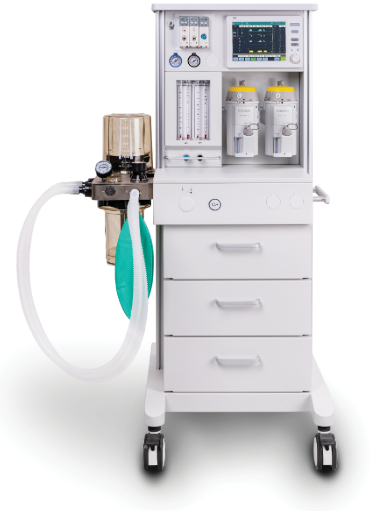
Comprehensive perioperative care depends on a coordinated ecosystem of hardware designed to stabilize vital functions. COMEN develops high-performance workstations that integrate gas delivery, ventilation, and real-time monitoring into a single interface. An anesthesia machine serves as the primary hub, allowing clinicians to regulate inhaled agents while maintaining precise control over a patient’s respiratory mechanics. By equipping surgical suites with advanced anesthesiologist equipment, medical facilities can manage the complex physiological transitions required for both minor procedures and major trauma surgeries with high diagnostic confidence.
Advanced Ventilation and Gas Delivery Systems
Precise control over the breathing circuit is a critical function of a modern surgical workstation. Electronic flow control technology within the anesthesia machine helps oxygen and anesthetic concentrations remain accurate even at low flow rates. This hardware supports a variety of ventilation modes, such as Pressure Control Ventilation (PCV) and Synchronized Intermittent Mandatory Ventilation (SIMV), to accommodate different patient demographics. Having such versatile anesthesiologist equipment allows the medical team to provide tailored respiratory support that prevents lung injury and ensures a smooth emergence from sedation.
Modular Monitoring and Physiological Feedback
Continuous visualization of patient data is required to identify subtle hemodynamic changes during an operation. An integrated anesthesia machine often features modular slots that support advanced monitoring parameters like Bispectral Index (BIS) for brain activity or Neuromuscular Transmission (NMT). These specialized modules represent a core component of anesthesiologist equipment, providing the data necessary to adjust drug dosages in real-time. By centralizing heart rate, blood pressure, and gas concentration waveforms on a high-definition screen, they allow the provider to maintain a safe anesthetic plane throughout the surgery.
Safety Mechanisms and Efficiency Tools
Protecting the clinical environment and the patient requires redundant safety features built directly into the workflow. A high-quality anesthesia machine includes an Anaesthetic Gas Scavenging System (AGSS) to remove exhaled gases from the room, ensuring the health of the surgical team. Additionally, they design anesthesiologist equipment with features like automated self-tests and bypass canisters for CO2 absorbers, which allow for maintenance without interrupting the procedure. These efficiency-focused technologies reduce the manual burden on staff, ensuring that the focus remains entirely on patient safety and stable recovery.
Reliable technological support remains the backbone of successful surgical intervention and patient safety. By harmonizing gas delivery with intelligent monitoring and ergonomic safety systems, they provide the necessary infrastructure for modern operating rooms. This commitment to precision ensures that every anesthesia machine contributes to a predictable and controlled clinical outcome, making such specialized anesthesiologist equipment indispensable in the current healthcare landscape.
