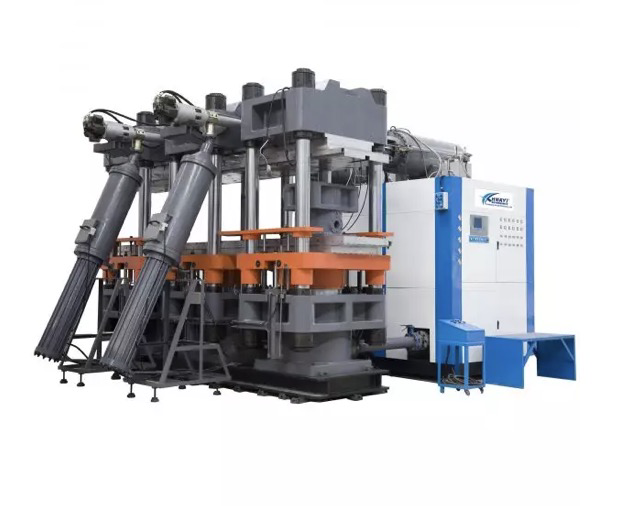
Industrial manufacturing environments continuously assess their production workflows to find the right balance between capital investment, operational efficiency, and product consistency. Within the specialized sector of elastomer processing, choosing between automation levels is a significant decision for plant managers. Operations spanning automotive components, power utility equipment, and heavy industrial goods often grapple with how to modernize their floor operations without disrupting existing workflows. Producers frequently weigh the operational characteristics of legacy manual equipment against modern, highly automated units.
When examining these contrasting methodologies, manufacturers look toward industry specialists such as HWAYI, which brings decades of technical expertise to the design and development of industrial rubber processing systems. By analyzing how different control mechanisms influence cycle times, operator safety, and part quality, facilities can make informed procurement decisions that align with their long-term production targets.
Operational Dynamics of Traditional Manual Systems
Manual vulcanization equipment has served as a foundational technology across many manufacturing facilities for decades. In a traditional setup, operators handle multiple stages of the cycle manually, including mold loading, precise material placement, pressure adjustment, and final part extraction. This hands-on approach offers certain advantages, particularly for small-batch runs or custom prototyping where parameters might shift frequently between jobs. Because the initial capital expenditure for manual machinery tends to be lower, smaller enterprises often adopt these systems to enter the market with manageable overhead costs.
However, manual processes introduce variables that can affect overall output uniformity. Operator fatigue, slight timing discrepancies, and manual pressure adjustments can lead to variations in cross-linking density across different batches. For sectors requiring strict dimensional tolerances, such as the production of specialized seals or complex gaskets, these minor inconsistencies can sometimes translate into higher scrap rates. Furthermore, manual loading and unloading routines expose floor personnel to higher thermal environments for longer durations, making safety protocols and operational pacing critical considerations for plant supervisors.
The Evolution Toward Automated Rubber Vulcanizing Technology
As industrial demand shifts toward higher volume outputs and tighter quality standards, automated manufacturing systems have gained widespread adoption.
A modern rubber vulcanizing machine integrates programmable logic controllers and precision hydraulic controls to manage temperature, pressure, and cure time with minimal human intervention. This technological progression helps reduce the variability inherent in manual operations, ensuring that every cycle adheres to exact predetermined specifications.
In automotive manufacturing, where components like door seals and dust covers must meet stringent performance criteria, automation ensures that each batch achieves uniform physical properties. Similarly, power-utility manufacturers producing thick-walled insulators and hollow bushings benefit from automated temperature profiling, which prevents uneven curing throughout dense rubber sections.
By streamlining these complex sequences, automated units reduce cycle times and optimize energy utilization across the entire production shift. This capability allows industrial plants to maintain steady output rates while reducing their reliance on continuous manual oversight.
Key Comparative Factors for B2B Procurement
When facility planners evaluate whether to upgrade their vulcanization lines, several critical operational factors usually guide their final assessment. Labor efficiency represents a major consideration, as automated systems shift personnel roles from repetitive physical loading to supervisory monitoring and quality control. This transition not only lowers long-term operational costs but also minimizes the risks associated with human error in high-temperature environments. Another vital element is equipment safety and compliance. Contemporary machinery frequently incorporates advanced safety interlocks, light curtains, and ergonomic sliding tables that protect operators during mold transitions.
To ensure regulatory compliance across global markets, enterprises often seek equipment holding recognized safety certifications, such as CE standards, which validate that the machinery meets rigorous health and safety directives. Furthermore, the adaptability of the equipment matters greatly. Manufacturers often require machinery that can handle diverse mold geometries without requiring extensive reconfiguration downtime. Equipment providers with strong research and development capabilities frequently assist clients by tailoring machine dimensions, heating plate sizes, and tonnage capacities to match unique factory layouts and product specifications.
Integrating Advanced Machinery into Existing Facility Workflows
Implementing new processing equipment requires careful coordination between the machinery provider and the plant engineering team. A reliable rubber vulcanizer must integrate smoothly with existing upstream mixing stations and downstream cooling or trimming lines.
When enterprises partner with experienced manufacturers, they typically receive comprehensive technical support that extends from initial plant layout planning to final on-site commissioning. This collaborative approach helps mitigate installation bottlenecks and ensures that all supporting infrastructure—such as hydraulic power units, electrical feeds, and cooling water loops—operates harmoniously.
Additionally, dependable after-sales service plays a decisive role in maintaining high equipment uptime. Access to readily available replacement parts, prompt technical troubleshooting, and scheduled maintenance guidance helps protect capital investments over their operational lifecycle. By leveraging proven manufacturing experience and comprehensive engineering support, industrial enterprises can successfully navigate the transition toward more efficient production methodologies, ultimately strengthening their competitive position within the broader manufacturing sector.
