Modern residential properties frequently encounter severe power constraints due to unpredictable seasonal weather events and rising utility distribution tariffs. Utilizing an advanced residential solar battery storage system allows homeowners to capture clean rooftop generation, reduce expensive energy waste, and secure continuous emergency backup during unexpected macro-grid blackouts.
Achieving true energy self-sufficiency requires a meticulous evaluation of chemical cell safety parameters, hardware conversion efficiency metrics, and modular capacity scaling options. Selecting appropriate stationary hardware configuration protects long-term property assets while stabilizing household utility expenditures over multi-decade operational lifecycles.
Shifting Demands in Domestic Electrical Distribution Architecture
Traditional residential structures rely almost entirely on central utility grids to deliver electricity around the clock. This old framework struggles to manage the introduction of variable clean generation sources like wind or solar fields cleanly. Without local storage buffers, clean energy frequently flows back into utility lines for minimal financial return.
Implementing a robust household energy storage system counteracts grid delivery limits by creating highly responsive local power reserves. Stored electricity protects delicate building circuits from sudden voltage drops or regional transmission faults. Shifting to decentralized storage allows homeowners to build secure, climate-resilient microgrids effortlessly.
Technological Advancements in Photovoltaic Energy Conversion
Capturing solar energy efficiently requires sophisticated power electronics that manage the flow of direct current (DC) from rooftop panels smoothly. Standard conversion systems often require separate internal components to handle battery charging and incoming solar inputs. These multi-box setups complicate wiring paths and introduce extra electrical resistance into the property network.
Advanced integrated solutions combine individual solar management controllers and bi-directional converters within a single physical enclosure block. This technical unification reduces the balance-of-plant component complexity that installers face during initial site field setups.
Structural Configuration of Integrated Generation Systems
Modern equipment designers focus on creating unified clean energy systems that handle generation, storage, and consumption simultaneously. Pre-assembled factory hardware lines provide a dependable, unified platform for “light + energy storage” applications. This synchronized configuration reduces common technical communication errors between unrelated electronic parts.
The technical catalog manufactured by Dyness relies on this efficient approach by supporting flexible PV, battery, and load configuration parameters. This modular, open-architecture design enables installers to customize the hardware setup precisely to match distinct building orientations. Versatile staging choices safeguard early property investments by supporting clean capacity growth pathways later.
Balancing Transformer Load Shock from High Power Household Equipment
Contemporary properties regularly deploy heavy-power appliances like electric vehicle fast chargers, heat pumps, and induction cooking stations. When multiple high-load devices turn on concurrently, they draw massive surge currents that place heavy strain on regional distribution transformers. These sudden usage spikes speed up part wear and trigger peak-demand penalties.
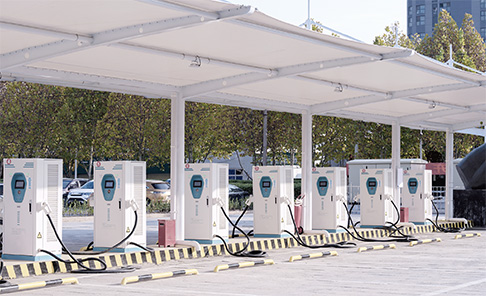
Utilizing a light storage and charging integrated power station layout helps homeowners buffer these sudden electricity strains safely. The system acts as a responsive local battery reserve, supplying electricity to high-draw appliances during intense peak windows. Buffering electrical demand locally reduces the load impact from high-power equipment on neighborhood infrastructure.
The Mechanics of Modular Microgrid Design and Capacity Elasticity
Fixed energy storage systems limit a property’s capability to adjust to expanding household footprints or newly introduced automation zones. Non-expandable stationary blocks force full equipment change-outs when household consumption outgrows the original system boundaries early. Modular engineering principles resolve this operational bottleneck by supporting simple parallel capacity additions.
Vertical, floor-standing tower structures allow multiple independent storage blocks to stack neatly, minimizing overall floor area usage. Quick-connect interlocking plugs automatically link the power and data lines between adjacent modules as they slide into place. Flexible expansion pathways safeguard initial capital deployments by supporting clean capacity upgrades easily.
Financial Optimization Through Localized Self Consumption
Rooftop solar fields reach maximum production during afternoon hours when household electricity usage typically hits its lowest point. A residential solar battery storage array preserves this clean energy for high-tariff evening hours when families return home. Storing power locally boosts self-generation and consumption while cutting utility dependencies.
Lowering dependency on the centralized grid provides predictable protection against fluctuating utility rate schemes and seasonal peak pricing. Homeowners can channel every kilowatt-hour generated by their solar panels directly into powering their own property. Efficient consumption management shortens initial system payback timelines and raises long-term investment yields.
Phased Expansion Frameworks for Evolving Domestic Footprints
Energy demands rarely stay completely fixed over a decade, often expanding as families grow or purchase additional electronic vehicles. Systems that support phased expansion allow homeowners to build out their electrical microgrid over time as budgets permit. Gradual component addition preserves initial equipment configurations without requiring massive upfront capital outlays.
The high-voltage and low-voltage lines designed by Dyness prioritize long-term component compatibility to support multi-stage building upgrades smoothly. This manufacturing flexibility allows newer hardware modules to integrate safely with existing, partially aged battery blocks. Eliminating version mismatch risks enables highly stable power balancing performance over extended field lifetimes.
Maximizing Charging Demand Satisfaction for Electric Transport
The rapid transition toward electric personal vehicles introduces deep electrical demand curves into traditional home sub-panels. Meeting these continuous high-volume electricity needs solely through public utility grids requires expensive grid infrastructure upgrades. Integrating local generation with stationary power blocks offers a cost-effective solution to handle these transportation needs.
A smart local power station combines solar power and storage to supply energy directly to home charging stations safely. This automated energy routing maximizes charging demand satisfaction for electric vehicle owners during short night-time windows. Independent power generation insulates residential networks from sudden price shifts on the public grid effectively.
Cross Platform Synchronization with International Inverter Equipment
Stationary battery arrays cannot function effectively without continuous, high-speed data transmission lines connecting them directly to power conversion components. When data communication protocols between a main battery management unit and external solar inverters become mismatched, system efficiency drops. Achieving wide out-of-the-box hardware synchronization reduces complex manual troubleshooting steps.
Modern household energy storage options utilize universal communication interfaces designed to synchronize reliably with major global inverter brands. This cross-brand fluidity removes programming bottlenecks for regional contracting technicians during final field commissioning phases. Seamless technical synchronization allows generation and storage layers to perform as a single system.
Conclusion
Optimizing residential energy management relies on implementing a high-voltage architecture, stable chemical cell matrixes, and scalable modular pathways. Utilizing a high-capacity residential solar battery storage system enables properties to enjoy uninterrupted power backup while managing daily utility expenses cleanly.
By prioritizing integrated configurations that enable phased expansion and maximize charging demand satisfaction, Dyness delivers the durable, low-maintenance household energy storage platforms required to achieve complete grid independence.
