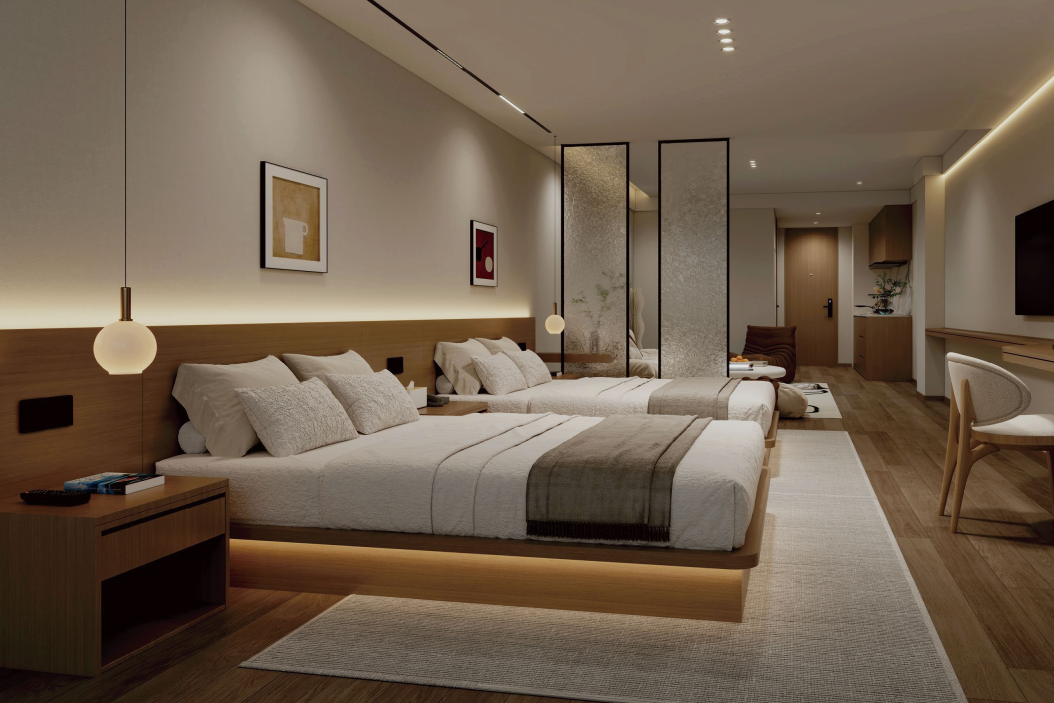
Expanding a hospitality portfolio often reveals severe inefficiencies during the Furniture, Fixtures, and Equipment (FF&E) procurement phase. Developers attempting to source casegoods, seating, and lighting from separate vendors frequently encounter mismatched wood veneers and conflicting delivery timelines.
These logistical hurdles tend to delay soft openings and strain initial operating budgets. Consolidating the purchasing process helps mitigate these common expansion hurdles by centralizing communication and standardizing the manufacturing timeline.
Sourcing cohesive hotel guest room furniture from a single provider supports a more streamlined installation schedule. This strategy aids project managers in maintaining strict budget controls while preserving the intended interior design narrative from concept to physical reality.
Evaluating Spatial Flow and Proportion
When outfitting multiple room typologies, analyzing the spatial footprint remains a critical early step. Oversized wardrobes in compact standard rooms restrict guest movement, while undersized desks in luxury suites often feel disproportionate and visually underwhelming.
Creating detailed floor plans prior to specification assists design teams in selecting correctly scaled pieces. Maintaining appropriate clearance around beds and entryways contributes to a more relaxed, unrestricted environment for weary travelers maneuvering large luggage.
The Value of Hotel Room Furniture Packages
Coordinating wood stains and metal finishes across multiple manufacturers often produces visible discrepancies. Minor variations in walnut veneers or brushed‑brass hardware can dilute the property’s high‑end aesthetic and weaken guest perceptions of quality. Sourcing comprehensive furniture sets lowers these mismatch risks; factory‑matched components deliver consistent coloring across headboards, nightstands, and media consoles, lifting perceived property value.
Grouped procurement also streamlines damaged‑item replacements. Accessing matching parts from a single vendor long after installation supports more consistent visual standards over the property’s operational lifespan.
Prioritizing Commercial-Grade Materials
Residential-grade furniture may not withstand the demands of frequent hotel use. Standard varnishes break down quickly with commercial cleaning products, and lightweight joints often loosen after months of frequent room turnover. High-pressure laminates and thermally fused melamine surfaces help resist chemical wear and thermal shock. Impact-resistant ABS edge banding on desks and nightstands lowers risks of moisture damage from spills or damp cleaning cloths.
Focusing on durable material details improves long-term stability. Choosing robust materials can reduce instances of expensive mid-cycle furniture replacements, easing cost pressure across the property’s operational lifespan.
Enhancing Ergonomics for Diverse Travelers
Business travelers and vacationing families interact with room furnishings in vastly different ways. Providing seating with inadequate lumbar support or desks set at improper heights tends to generate subtle physical discomfort during extended stays.
Collaborating with an experienced manufacturer like BFP Furniture enables procurement teams to access ergonomically calibrated designs. Thoughtful structural engineering in lounge chairs and desk seating aids in accommodating diverse body types effectively.
Proper ergonomic support in secondary seating areas subtly encourages guests to spend more time relaxing within the property. This comfort-focused approach contributes to higher satisfaction scores.
Integrating Subtle Technological Conveniences
Modern travelers increasingly rely on multiple electronic devices, making accessible charging stations a vital component of room design. Relying solely on wall outlets frequently forces guests to awkwardly move heavy nightstands or crawl under desks.
Incorporating integrated USB-C ports and standard outlets directly into headboard panels and desk surfaces mitigates this frustration. Specifying concealed wire routing channels within casegoods helps maintain a visually uncluttered environment while supporting modern connectivity needs.
Additionally, structural allowances for automated room controls within bedside tables require careful consideration during the drafting phase. Integrating these technological touchpoints subtly into the wood finishes supports a sophisticated, forward-thinking guest experience.
Reflecting Brand Identity Through Customization
Standardized catalog furniture occasionally struggles to capture the unique regional context or specific brand narrative of a boutique property. Generic silhouettes can leave rooms feeling sterile, detracting from the immersive experience modern travelers seek.
Customizing upholstery fabrics, hardware finishes, and wood tones aids in establishing a distinct visual identity. Tailoring these elements to reflect local cultural motifs or architectural surroundings helps cultivate a more memorable and engaging environment for visitors.
Working closely with design teams during the specification phase allows for unique detailing, such as bespoke routing patterns on wardrobe doors or custom metal leg profiles on lounge seating. Customized finishing details subtly maintain the overall unified aesthetic style of the hotel space.
Navigating Safety and Compliance Standards
Commercial hospitality spaces face strict regional fire and safety regulations that dictate material selection. Utilizing uncertified upholstery foams or highly flammable drapery materials exposes ownership to significant liability and potential code violations during final inspections.
Selecting textiles treated with advanced fire retardants assists in meeting these stringent codes. Specifying low-volatile organic compound (VOC) paints and non-toxic wood stains contributes to better indoor air quality, which supports a healthier environment for both guests and housekeeping staff.
Evaluating weight capacities on suspended items, such as wall-mounted headboards or floating nightstands, helps prevent structural failures. Implementing appropriate safety testing protocols during the manufacturing phase aids in reducing long-term liability risks.
Streamlining Installation and Supply Chain Logistics
Managing the arrival of hundreds of furniture pieces presents distinct logistical challenges. Uncoordinated deliveries often clutter active construction zones, while delayed shipments of critical items like beds threaten scheduled marketing events and initial bookings.
Establishing staggered delivery schedules aligned with floor-by-floor site readiness aids in smoothing the final installation phase. Detailed crate labeling by room typology supports local assembly teams in executing a rapid, highly organized distribution process.
Thorough pre-shipment quality control inspections help mitigate the arrival of damaged or dimensionally incorrect pieces. Specifying complete hotel room furniture packages streamlines this entire final phase, allowing property management to transition smoothly into revenue-generating hospitality operations.
