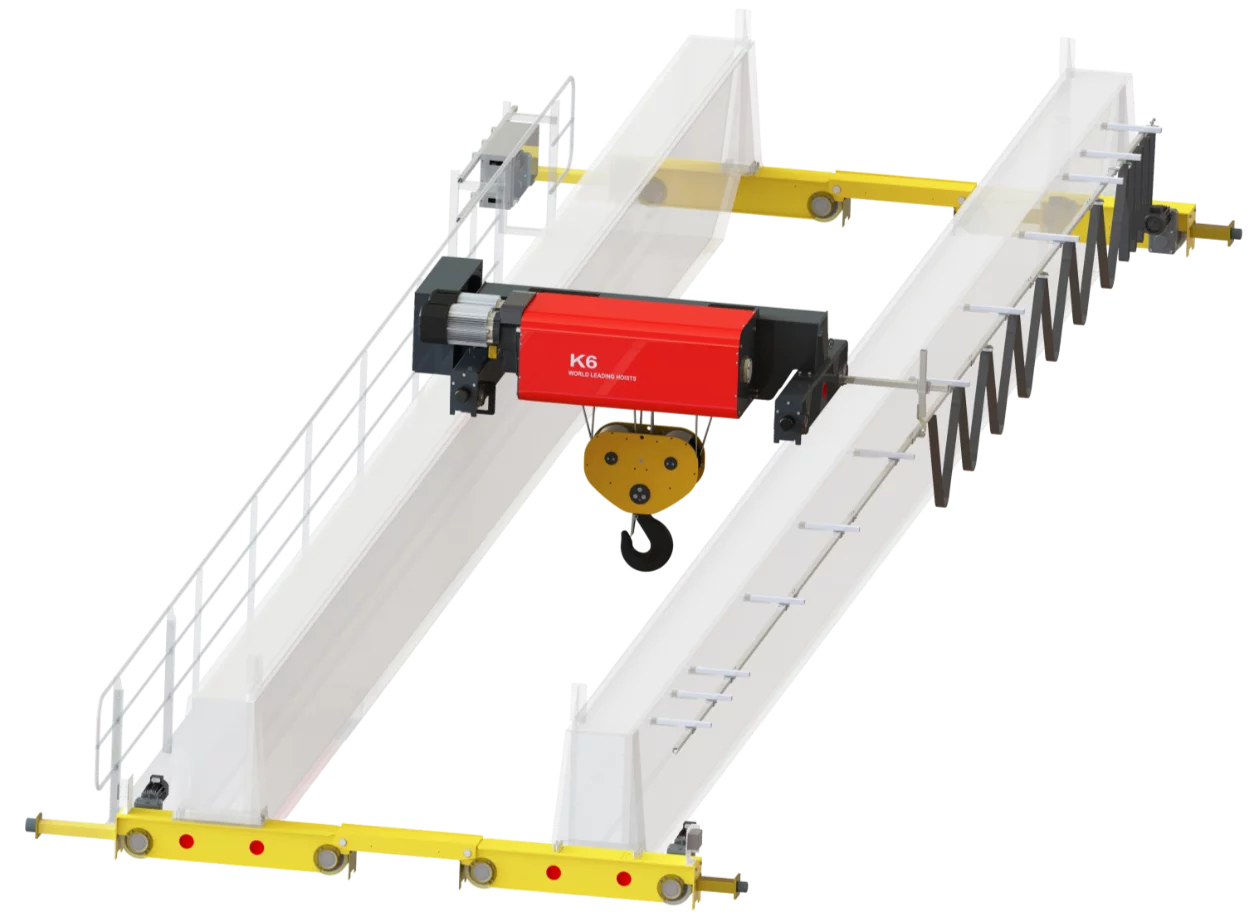
Efficient lifting depends on more than the crane itself. The equipment connected beneath the crane plays an important role in load stability, handling control, installation efficiency, and overall operating safety. Choosing the right crane kits & lifting attachments can support application-specific lifting requirements while helping reduce unnecessary installation and maintenance challenges.
For operations handling machinery, steel products, components, or other heavy materials, the selection of below the hook attachments should begin with a clear understanding of the load, lifting environment, and crane configuration. WORLDHOISTS provides crane kits and specialized lifting attachments designed for different industrial applications, including standard and custom engineered solutions.
Why Below the Hook Equipment Matters
A crane provides the lifting motion, but the equipment beneath the hook determines how a load is connected, supported, and controlled. Poorly matched equipment can make lifting more difficult and may increase the possibility of load instability, uneven weight distribution, or unnecessary stress on components.
Below hook lifting equipment can include specialized devices designed for particular load shapes and handling requirements. The appropriate solution may help distribute weight more effectively, maintain better load positioning, and simplify repetitive lifting operations.
This is particularly important when standard hooks or slings are not suitable for the material being handled. For example, large, unusually shaped, delicate, or application specific loads may require specialized crane lifting attachments to achieve stable and controlled movement.
What to Consider When Selecting Lifting Attachments
The first consideration is load characteristics. Weight, dimensions, center of gravity, surface condition, and lifting points all influence which attachment is appropriate. An attachment should be compatible with the intended load and rated for the required working conditions.
The crane configuration also matters. Single girder, double girder, suspended, and monorail systems may have different structural and operational requirements. Selecting components that integrate properly with the existing crane can reduce compatibility issues during installation.
The operating environment should also be evaluated. Equipment used in corrosive areas, extreme climates, or potentially hazardous locations may require specialized engineering. WORLDHOISTS states that its crane kits and lifting attachments can be configured for demanding environments, including corrosive and explosion proof applications.
Another consideration is frequency of use. Equipment operating through repeated lifting cycles requires components designed for the expected workload and movement pattern. A suitable attachment should support consistent handling without creating unnecessary delays between lifting tasks.
Crane Kits Can Simplify System Integration
For projects involving more than an individual attachment, a complete crane kit can provide a more coordinated approach to system design and installation. Instead of sourcing every component separately, a crane kit can bring key elements together according to the intended crane configuration.
WORLDHOISTS offers crane kits for configurations including single girder, double girder, suspended, and monorail systems. Its product range is intended to support applications ranging from standard workshop lifting systems to heavy duty and explosion proof equipment.
Another practical consideration is installation. WORLDHOISTS uses pre assembled and pre wired electrical components in its crane kits, while its modular design is intended to simplify installation and reduce on site construction time.
For projects where installation schedules are tight, this approach can help reduce the amount of assembly required on site and make coordination between different crane components more straightforward.
Lift Assist Devices for Better Load Control
In many material handling applications, the objective is not simply to raise a load. Operators also need to position, move, and place materials accurately. Lift assist devices can support these tasks by providing a more suitable connection between the crane and the load.
The correct attachment can improve handling control by matching the lifting method to the physical characteristics of the material. This can be particularly useful when loads are oversized, irregularly shaped, or difficult to secure using conventional methods.
Load distribution is another important factor. Specialized lifting equipment can help distribute forces more appropriately, reducing the likelihood of concentrated loading during handling. However, attachment selection should always consider the crane’s rated capacity, the attachment’s working load limit, and the complete lifting configuration.
When Custom Crane Lifting Attachments Are Appropriate
Standard equipment can satisfy many routine applications, but some lifting operations have requirements that cannot be addressed effectively with off the shelf components. In these situations, custom engineered crane lifting attachments may provide a better technical fit.
Customization can involve the dimensions, connection method, load interface, environmental protection, or integration with an existing crane system. The objective should not simply be to create a unique component, but to ensure that the equipment works correctly within the complete lifting system.
WORLDHOISTS provides customized lifting attachment solutions alongside its standard crane kits. Its product information notes that solutions can be adapted for specific environmental and operational requirements.
Building a More Suitable Lifting System
The right crane kits & lifting attachments should be selected as part of the complete lifting system rather than as isolated components. When the crane, hoist, attachment, and supporting structures are properly matched, operators can achieve better load control while simplifying installation and ongoing equipment management.
WORLDHOISTS combines standard crane kits with specialized and custom engineered lifting attachments, providing options for different crane configurations and operating environments.
For organizations evaluating new lifting systems or upgrading existing equipment, focusing on compatibility, load requirements, environmental conditions, and installation needs can make the selection process more practical. The result is a lifting solution designed around the actual application, with safety, control, and handling efficiency considered from the beginning.
