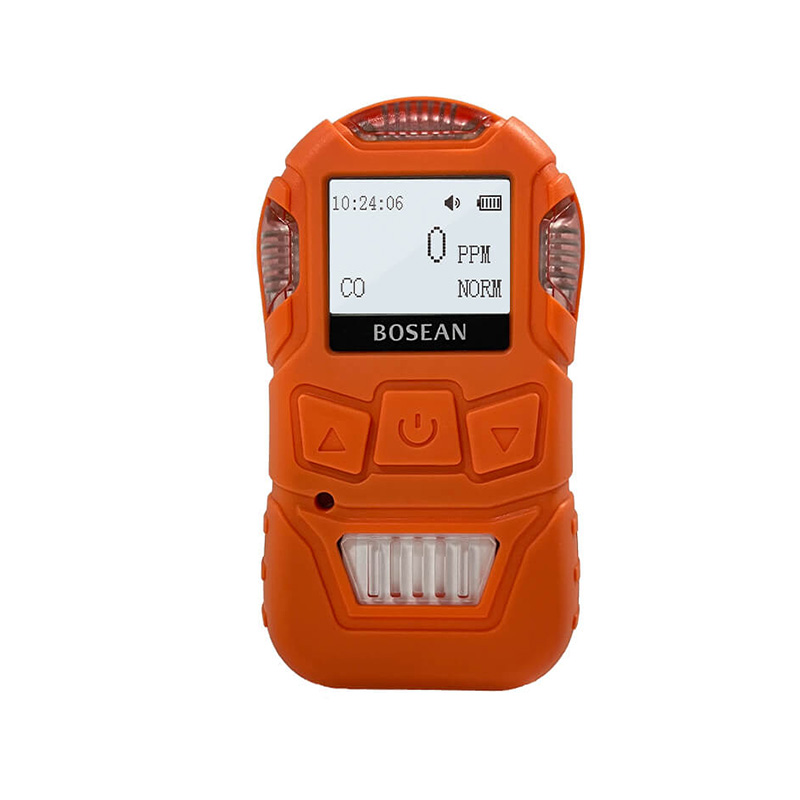
Pharmaceutical production plants handle chemicals, solvents, cleaning agents, and process gases that can create toxic exposure risks during routine operations or maintenance. Portable detection helps safety teams check work areas, investigate suspected leaks, and assess atmospheres before personnel enter restricted spaces.
Selecting suitable equipment requires matching the sensor to the target substance, understanding sampling limitations, and establishing calibration and response procedures. A qualified gas detector manufacturer should provide clear technical information and support, while Bosean’s K-10 offers a compact single-gas monitoring option when configured for the required application.
Where Toxic Gas Risks Occur in Pharmaceutical Facilities
Potential exposure points include chemical storage, dispensing areas, reactors, utility spaces, wastewater treatment, and laboratories. Risk assessments should consider raw materials, cleaning chemicals, by-products, and gases used in manufacturing or maintenance.
Hazards may arise during production, equipment opening, line breaking, tank cleaning, or confined-space work. A portable toxic gas detector helps trained personnel assess specific locations. This portable toxic gas detector should be selected for actual chemical hazards, not treated as a universal instrument.
Why Portable Monitoring Matters Alongside Fixed Systems
Fixed detectors cover designated points, while portable instruments let safety personnel check changing work areas, suspected release points, and temporary maintenance locations.
A portable unit can also support pre-entry atmospheric testing where site procedures require it. However, it must suit the target gas and sampling conditions. A single-gas device measures only the substance for which its sensor is configured; it cannot establish that an atmosphere is free of other hazards. Oxygen deficiency, flammable vapors, and additional toxic gases may require separate or multi-gas monitoring.
Choosing the Right Portable Toxic Gas Detector
Identify the Target Gas and Exposure Limits
The first purchasing decision is the substance to be detected. Facilities should review chemical inventories, safety data sheets, process descriptions, and exposure assessments to identify relevant gases and vapors. They should compare the sensor’s detection range, resolution, response time, and alarm settings with occupational exposure limits and site requirements.
Cross-sensitivity, interfering substances, humidity, and temperature can affect readings. Buyers should request sensor documentation and confirm suitability before deployment.
Evaluate Alarms and Operating Features
Workers need to recognize an alarm quickly, including in noisy production areas or while wearing protective equipment. Audible, visual, and vibration alerts provide different warning channels. A readable display helps operators interpret readings, while straightforward controls can simplify training.
Battery capacity, enclosure protection, and ease of cleaning also matter. The selected portable toxic gas detector should fit site hygiene and contamination-control procedures without compromising sensor performance.
Review Calibration, Testing, and Service Support
Portable instruments require ongoing care. Bump testing verifies that gas reaches the sensor and activates alarms; calibration checks and adjusts readings against a known reference gas. Frequency should follow manufacturer instructions, site risk assessment, and applicable regulations.
Procurement teams should consider calibration gas, sensor replacement, service, documentation, and training. A gas detector manufacturer should explain maintenance requirements and provide manuals and technical assistance. These factors influence lifecycle cost.
Before deployment, teams should conduct a documented site evaluation and confirm that the detector can operate under expected temperature, humidity, and cleaning conditions. Sampling probes or tubing may be needed to test remote points, but their length and response delay must be considered. Readings should be interpreted by trained personnel, with clear instructions for leaving an area when an alarm activates.
Bosean K-10: A Single-Gas Monitoring Option
The Bosean K-10 Single Gas Detector is a portable instrument designed to monitor one selected gas at a time. Its configuration should match the target substance and be confirmed with the supplier before purchase. Product information identifies an imported sensor, natural-diffusion sampling, and integrated circuit technology for gas measurement.
The K-10 provides audible, visual, and vibration alarms, alongside a display for readings. Its 1500mAh battery supports portable operation, while the IP66 enclosure rating indicates protection against dust ingress and powerful water jets under specified test conditions. These features may suit inspection teams moving between designated monitoring points.
For pharmaceutical buyers, the key question is whether the available sensor option suits the gas identified in the facility risk assessment. Bosean’s K-10 should not be assumed to detect multiple substances simultaneously or replace a multi-gas instrument where several hazards may be present. A gas detector manufacturer should confirm the exact sensor, range, alarm thresholds, calibration method, and certifications for the ordered configuration.
Integrating Portable Detection into Site Procedures
Facilities should define who may use detectors, where checks are required, how readings are recorded, and what actions follow an alarm. Personnel need training in sensor limitations, sampling, and emergency response.
Monitoring should complement ventilation, containment, safe handling, and personal protective equipment. Confined-space work requires entry and rescue procedures, atmospheric testing, and continuous monitoring where applicable. Records of tests, calibration, and alarms help demonstrate control.
Building a More Reliable Toxic Gas Monitoring Program
Portable detection supports pharmaceutical safety when equipment matches documented hazards and is maintained consistently. Buyers should assess target gases, sensor performance, alarms, environmental protection, calibration, and supplier support. An experienced gas detector manufacturer can clarify these requirements and confirm whether a portable toxic gas detector is suitable for the site’s identified substances. Bosean‘s K-10 offers an IP66 single-gas option with multiple alarm methods, provided its sensor suits the application. Effective programs combine appropriate instruments, trained users, and regular verification.
